

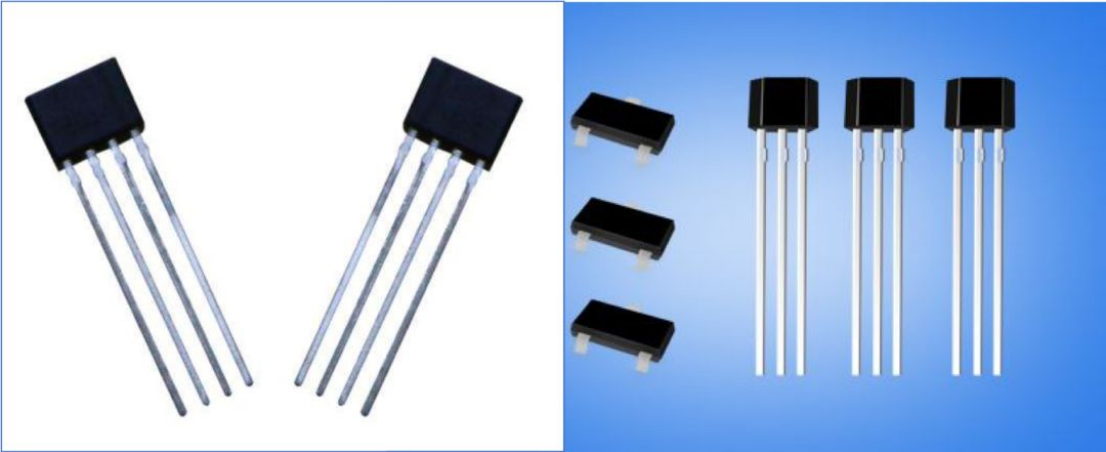
A Hall element is a magnetic sensor based on the Hall effect. It can detect magnetic fields and their changes, and thus be used in various scenarios related to magnetic fields. Hall elements boast numerous advantages: they have a robust structure, small volume, light weight, long service life, and are easy to install. Additionally, they feature low power consumption, high frequency (up to 1 MHz), resistance to vibration, and immunity to contamination or corrosion from dust, oil, moisture, salt spray, and the like.
Hall elements have an extremely wide range of applications. For instance, they serve as signal sensors in automobile distributors, speed sensors in ABS (Anti-lock Braking System), automobile speedometers and odometers, liquid physical quantity detectors, current detectors and working status diagnostic devices for various electrical loads, engine speed and crankshaft angle sensors, as well as various switches, and so on.
Hall Effect
To understand the working principle of a Hall element, let us first start with learning about the Hall effect.
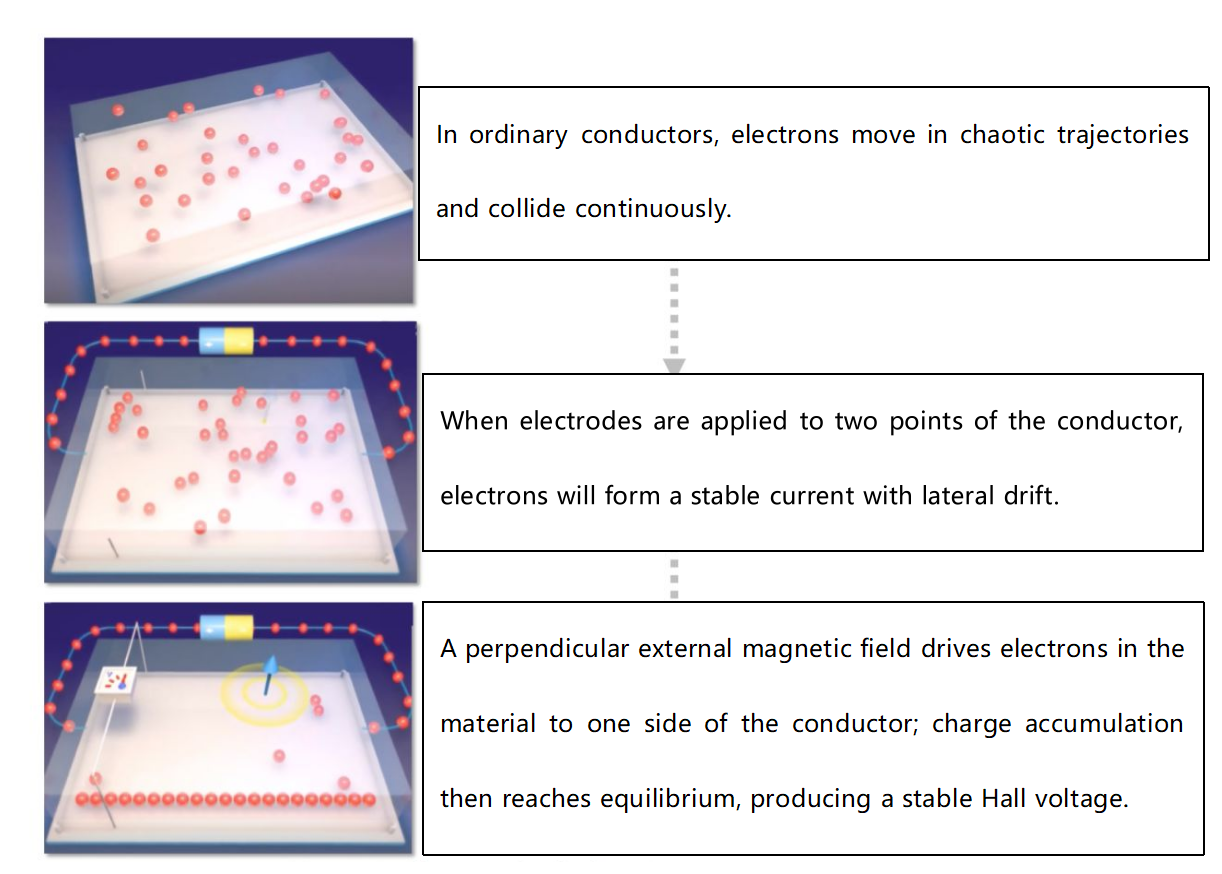
The Hall effect is a type of electromagnetic effect. This phenomenon was discovered in 1879 by Edwin Hall, an American physicist, while he was researching the electrical conduction mechanism of metals. When an electric current passes through a semiconductor **perpendicularly** to an external magnetic field, the charge carriers (electrons or holes) deflect. This deflection creates an additional electric field perpendicular to both the direction of the current and the magnetic field, thereby generating a potential difference between the two ends of the semiconductor. This phenomenon is known as the Hall effect, and the resulting potential difference is also called the Hall voltage.
Schematic Diagram of the Hall Principle
Hall Element
A Hall device made based on the Hall effect uses a magnetic field as a working medium to convert the motion parameters of an object into a digital voltage output, enabling it to have sensing and switching functions. According to their functions, Hall elements can be divided into **Hall linear elements** and **Hall switch elements**; the former outputs analog quantities, while the latter outputs digital quantities.
01. Hall Linear Element
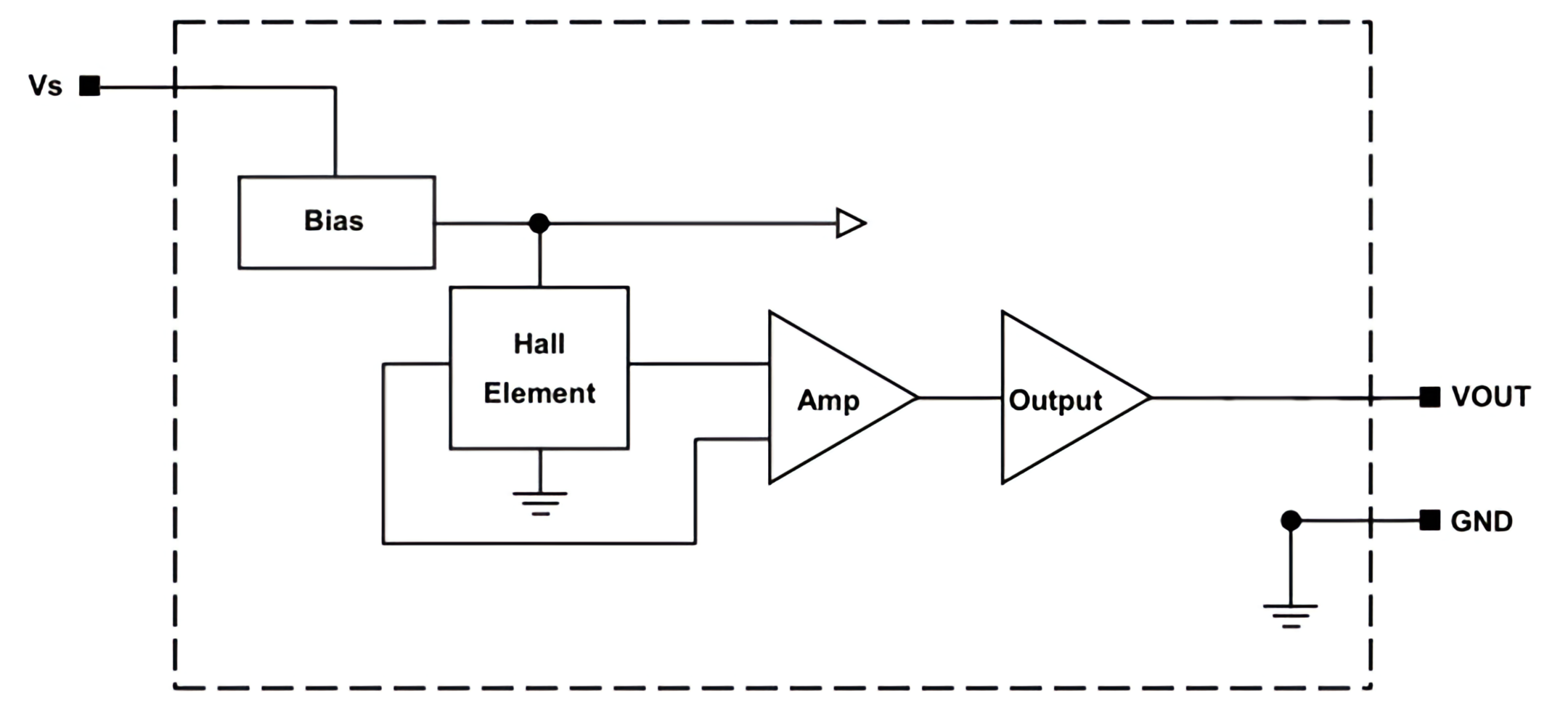
The internal structure of a linear Hall element mainly includes three parts: a voltage-stabilizing circuit, a linear Hall element, and an operational amplifier. Its input is the magnetic induction intensity, and its output is a voltage proportional to the input. This type of circuit has high sensitivity and excellent linearity, making it suitable for various magnetic field detection applications. A linear Hall element triggers a parabolic response based on the strength of the magnetic field. For example, the accelerator handle of an electric vehicle uses a linear Hall element, which can adjust the speed from 0 to maximum according to changes in the magnetic field. However, when the magnetic field strength exceeds the highest point of a certain range, the speed remains constant.
02. Hall Switch
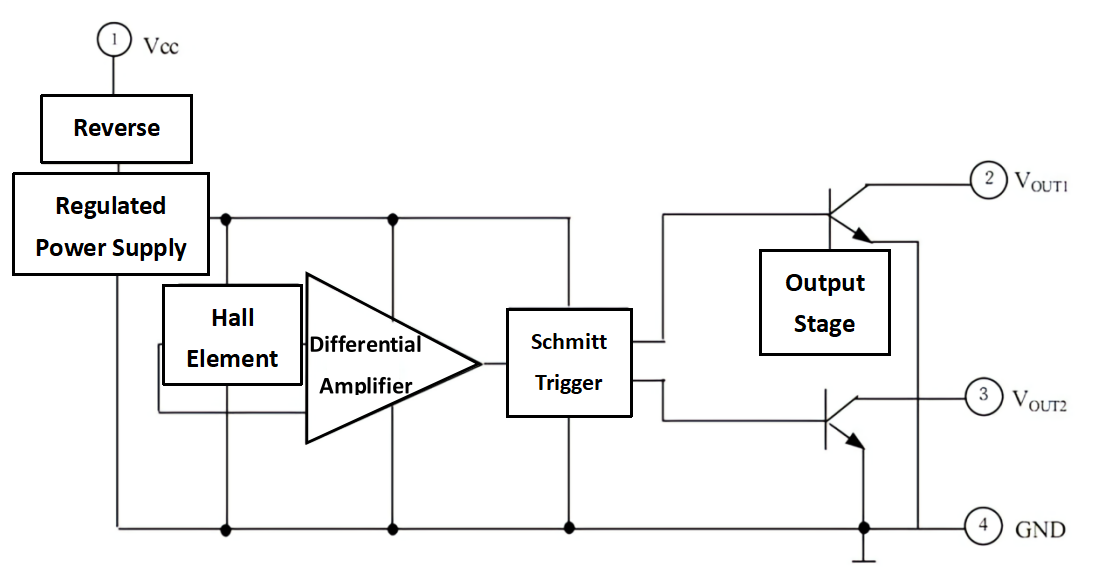
A switch-type Hall sensor consists of a voltage regulator, a Hall element, an amplifier, a Schmitt trigger, and an output stage.
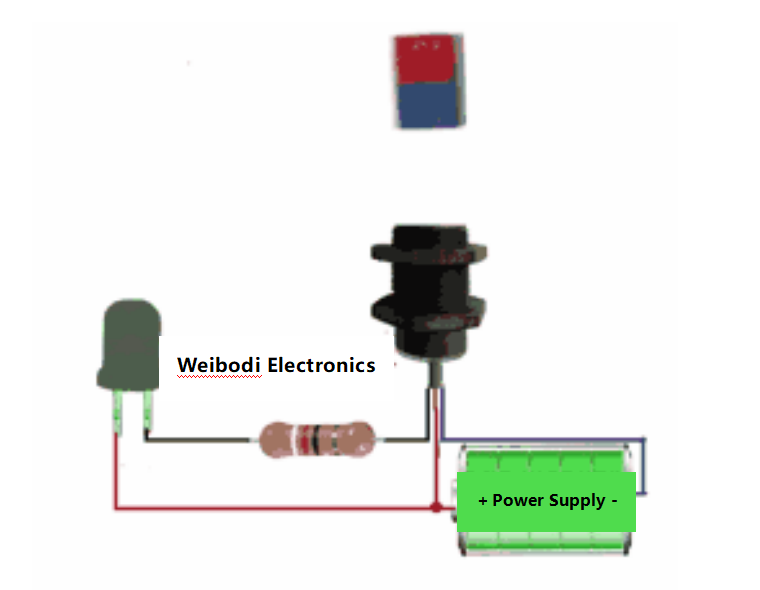
When a magnetic object approaches a Hall switch, the Hall element on the switch's detection surface generates the Hall effect, which changes the state of the internal circuit of the switch. This allows the switch to recognize the presence of a nearby magnetic object and further control the switch to turn on or off. The detection target of this type of proximity switch must be a magnetic object.